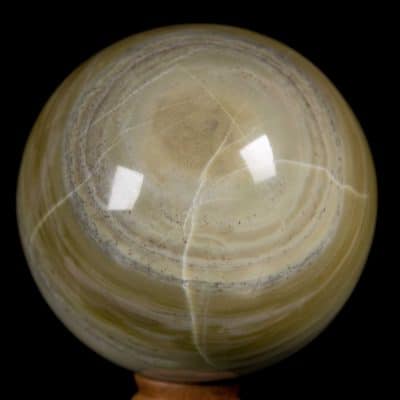
Rich blue to teal coloration with earthy brown matrix
High-gloss polish enhancing natural mineral textures
Substantial display specimen with smooth, tactile feel
Collected from the Kaokoveld region of Namibia
Specimen Details
Weight
28.6 oz (810.6 g)
Size
3.27 x 3.69 in (8.30 x 9.38 cm)
Origin
Kaokoveld, Namibia
Crystal Description
This polished Shattuckite freeform features layered blue and teal tones interwoven with warm brown and coppery matrix, creating a richly textured, natural appearance. The smooth polish brings out subtle variations in color while preserving the organic character of the stone. Read More →
Shattuckite is a copper silicate mineral known for its deep blue hues and grounding visual presence. In this specimen, the mineral occurs with natural matrix, resulting in an earthy contrast between vivid blues and darker host material.
The freeform shape and substantial weight make this piece well-suited for shelf, desk, or altar display. Its polished surface highlights natural mineral boundaries and textures without artificial enhancement, offering a visually striking yet authentic specimen from one of Namibia’s classic copper mineral regions.
Click/Tap Buttons to Jump to Section
Chrysocolla Origins & Background
Chrysocolla is a copper-based mineral known for its rich blue, turquoise, teal, and green coloration. Its name is derived from the Greek chrysos (gold) and kolla (glue), referencing its historical use in ancient gold soldering processes.
Rather than forming as well-defined crystals, Chrysocolla typically occurs as massive, botryoidal, or vein-filling material within copper-rich environments. It is often found in association with other secondary copper minerals such as Malachite, Azurite, Cuprite, and Quartz.
Because Chrysocolla varies widely in composition and structure, its hardness and durability can differ significantly from specimen to specimen. Some material is soft and chalky, while higher-quality Chrysocolla may be partially silicified, resulting in improved stability and polish.
Chrysocolla has been used historically by ancient cultures for ornamentation, pigments, and symbolic objects, particularly in regions with abundant copper deposits.
Chrysocolla is a hydrated copper silicate that forms as a secondary mineral in the oxidation zones of copper deposits. It develops when copper-bearing solutions interact with silica-rich environments near the Earth’s surface.
Unlike crystalline minerals, Chrysocolla is typically amorphous to microcrystalline, which accounts for its variable physical properties. In many cases, Chrysocolla occurs intergrown with Quartz, forming what is sometimes referred to as “Chrysocolla in Quartz,” a more durable material.
Its color is primarily derived from copper content, producing shades ranging from soft sky blue to deep greenish-blue.
Chrysocolla is traditionally associated with calm communication, emotional awareness, and inner alignment. It is often described as working gently with the subconscious mind, helping to soften internal resistance and allow change to occur more naturally.
This stone is commonly linked with feminine or receptive qualities such as intuition, compassion, and emotional flow. These qualities are not gender-specific and may be utilized by anyone seeking balance, self-expression, or inner stillness.
Chrysocolla is frequently held or carried during periods of stress or anxiety, where it is traditionally believed to encourage calm presence and steadier emotional rhythms. Many people choose it as a support stone for communication, particularly when clarity, confidence, or thoughtful expression is needed.
It is especially favored for public speaking, teaching, and spiritual communication, where calm delivery and authentic expression are valued over force or persuasion.
Chrysocolla is traditionally associated with:
Subconscious clearing and emotional awareness
Calm, confident communication
Stress and anxiety support
Feminine, receptive energy and balance
Spiritual alignment and teaching
Chrysocolla Crystal Pairings & Synergy
Chrysocolla pairs well with stones that support grounding, clarity, and expression.
⚠️ Important: Chrysocolla is soft and sensitive. Cleansing methods should always prioritize physical preservation.
Water safety: Chrysocolla is not recommended for water cleansing.
Recommended crystal-safe options:
Sound: soft tones or singing bowls.
Smoke cleansing: very light wafting.
Moonlight: brief exposure.
Selenite plate: dry-cleansing support.
Breath-focused meditation: calming and centering practices.
If unsure: Choose the gentlest method available. Chrysocolla responds best to calm, steady interaction.
Summary
Chrysocolla is a stone of calm expression, emotional clarity, and aligned communication. It supports confident speech and thoughtful connection by encouraging inner stillness, receptivity, and authentic voice.



 Guaranteed Safe Checkout