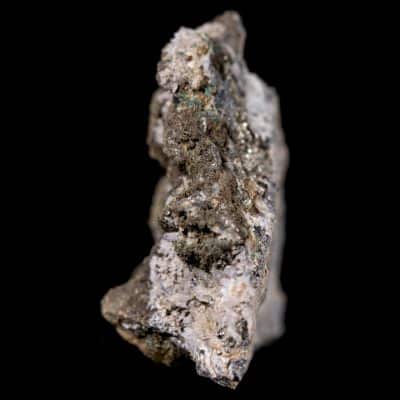
Weight – 29.9 oz’s – 849 gm’s
Dimensions – 3.315″ x 2.088″ tall x wide – (8.422 x 5.304 cm’s)
Country of Origin – Brazil



USD $163.00
SKU: P3187
This crystal is very clear with beautiful inclusions of of a mystery translucent olive green colored hexagonal shaped crystal!
In stock
Use the tabs below to explore crystal origins, geological details, crystal care guidance, and metaphysical insights.
Weight – 29.9 oz’s – 849 gm’s
Dimensions – 3.315″ x 2.088″ tall x wide – (8.422 x 5.304 cm’s)
Country of Origin – Brazil
Click/Tap Buttons to Jump to Section
Clear Quartz is the most widespread and versatile form of Quartz, valued for its transparency, structural clarity, and wide range of natural growth habits. Composed of silicon dioxide, it forms in diverse geological environments and is found on every continent.
Throughout history, Clear Quartz has been used by cultures worldwide for tools, ornamentation, ceremonial objects, and symbolic practices. Its clarity and durability made it a natural focal point for observation, reflection, and intention-based work long before modern terminology existed.
While Clear Quartz occurs globally, certain localities are especially prized for exceptional quality. Colombian Clear Quartz, particularly from high-altitude Andean regions, is widely regarded among collectors and practitioners as some of the highest-quality Clear Quartz in the world. These crystals are known for their exceptional clarity, brightness, and refined growth, often displaying high-frequency visual purity with minimal internal disruption.
Other notable sources include Brazil, Arkansas (USA), Madagascar, Himalayan regions, and Alpine environments, each producing distinctive variations in form and internal character.
Clear Quartz is composed of silicon dioxide (SiO₂) and crystallizes in the trigonal crystal system. It commonly forms in hydrothermal veins, pegmatites, and igneous, metamorphic, and sedimentary environments.
Quartz crystals grow when silica-rich fluids cool and crystallize over extended periods. The clarity of Clear Quartz depends on growth stability, temperature consistency, and the absence of inclusions during formation.
Clear Quartz may occur as single points, clusters, twin crystals, or specialized growth formations. Its hardness and chemical stability make it one of the most durable naturally occurring minerals.
| Property | Value |
|---|---|
| Mineral Species | Quartz (Clear / Rock Crystal) |
| Chemical Formula | SiO₂ |
| Crystal System | Trigonal |
| Hardness (Mohs Scale) | 7 |
| Luster | Vitreous |
| Transparency | Transparent to translucent |
| Fracture | Conchoidal |
| Typical Formation | Hydrothermal veins, pegmatites, igneous & metamorphic rocks |
⚠️ Handling:
Clear Quartz is durable but crystal points and terminations can chip if knocked. Lift from the base when possible.
🧼 Cleaning:
Water-safe for brief rinsing. Avoid prolonged soaking if fractures or inclusions are present. Dry thoroughly.
☀️ Light:
Clear Quartz is light-stable and safe for normal display conditions.
📦 Storage & Display:
Store separately from softer minerals to prevent scratching. Stable display helps preserve terminations and clarity.
Click/Tap Buttons to Jump to Section
Tourmaline is one of the most chemically complex mineral families on Earth, comprising a large group of boron silicate minerals with varying compositions. This complexity is what allows Tourmaline to form in an extraordinary range of colors—often multiple colors within a single crystal.
The name “Tourmaline” originates from the Sinhalese word turmali, meaning “mixed gemstones,” a reference to the many differently colored crystals that were historically grouped together under this name.
Tourmaline occurs worldwide, with notable deposits in Brazil, Afghanistan, Pakistan, Africa, Madagascar, Sri Lanka, and the United States. Many of the finest multi-colored and gem-quality specimens come from Brazil and Afghanistan.
Tourmaline is strongly piezoelectric and pyroelectric, meaning it can generate an electrical charge when subjected to pressure or temperature change. This physical property has been studied extensively and contributes to Tourmaline’s use in scientific, industrial, and technological applications.
From a metaphysical perspective, Tourmaline has long been regarded as a stone of energetic regulation and balance across multiple levels.
Tourmaline forms primarily in granitic pegmatites, metamorphic rocks, and hydrothermal veins. Its complex chemistry allows it to incorporate a wide range of elements, including iron, magnesium, lithium, sodium, calcium, and aluminum.
| Property | Value |
|---|---|
| Mineral Class | Borosilicate |
| Chemical Formula | Complex (varies by species) |
| Crystal System | Trigonal |
| Hardness (Mohs) | 7 – 7.5 |
| Luster | Vitreous |
| Transparency | Transparent to opaque |
| Common Colors | Black, Green, Pink, Blue, Red, Yellow, Multicolor |
| Special Properties | Piezoelectric & Pyroelectric |
Tourmaline crystals typically form as long prismatic columns with vertical striations. Zoned and bi-colored crystals are common due to changes in chemistry during growth.
🧼 Cleaning:
Tourmaline may be gently cleaned with lukewarm water and a soft cloth. Avoid harsh chemicals and prolonged soaking, especially for lithium-rich varieties.
⚠️ Handling:
Although relatively hard, Tourmaline can fracture along growth lines. Handle carefully, particularly long prismatic crystals.
☀️ Light Exposure:
Some colored Tourmalines (especially pink and green) may fade with prolonged exposure to strong sunlight.
📦 Storage:
Store separately to avoid scratching other crystals, particularly softer minerals.
Click/Tap Buttons to Jump to Section
Included Quartz refers to Quartz crystals that contain other minerals trapped within them during growth. These inclusions may appear as needles, clouds, veils, phantoms, sprays, plates, threads, or granular deposits, each reflecting the geological conditions present at the time of formation.
Common inclusions include Chlorite, Rutile, Tourmaline, Titanium-bearing minerals, Iron oxides, and many others. Each specimen is inherently unique, as the timing, chemistry, and environment of growth determine the inclusion’s shape, placement, and density.
Included Quartz occurs worldwide, with notable localities in Brazil, Madagascar, Pakistan, India, the United States, and parts of Africa. Because inclusions record a snapshot of the crystal’s growth history, many collectors consider Included Quartz to be a visual and geological record of Earth’s evolving conditions.
Included Quartz is composed of silicon dioxide (SiO₂) and crystallizes in the trigonal crystal system, consistent with all Quartz varieties. The defining feature is the presence of one or more foreign minerals incorporated during crystal growth.
Inclusions form when Quartz grows in environments where other minerals are suspended in hydrothermal fluids. As the Quartz crystal develops, these minerals may become trapped internally rather than being excluded or deposited on the surface. Growth may continue around the inclusion, fully enclosing it within the crystal body.
In some cases, inclusions outline earlier growth stages, forming phantoms. In others, needle-like or fibrous inclusions such as Rutile or Tourmaline grow simultaneously with the Quartz, creating complex internal structures.
| Property | Value |
|---|---|
| Mineral Species | Quartz with mineral inclusions |
| Chemical Formula | SiO₂ (host crystal) |
| Crystal System | Trigonal |
| Hardness (Mohs Scale) | 7 (host crystal) |
| Luster | Vitreous |
| Transparency | Transparent to translucent |
| Defining Feature | Internal mineral inclusions |
From a geological perspective, inclusions provide valuable insight into the temperature, pressure, and chemistry present during crystal formation. Each Included Quartz specimen is effectively a natural archive of its growth environment.
⚠️ Handling:
Included Quartz is generally durable, but internal fractures or delicate inclusions may be present. Handle gently and avoid sudden impacts.
🧼 Cleaning:
Water-safe for brief rinsing. Avoid prolonged soaking, especially for crystals with visible fractures or porous inclusions. Dry thoroughly.
☀️ Light:
Most Included Quartz is light-stable. Some iron-rich inclusions may darken slightly with prolonged intense sunlight.
📦 Storage & Display:
Store separated from harder specimens to prevent chipping. Display securely to protect terminations.
Flat Rate Shipping of only $6 – $9 USD equivalent, add as many items as you like!
 Guaranteed Safe Checkout