| Specimen Details | |
|---|---|
| Weight | 6.65 oz’s – 188.4 g |
| Dimensions | 3.780″ x 1.773″ tall/wide (9.601 x 4.505 cm’s) |
| Country of Origin | Pakistan |
Polished Caribbean Blue Calcite Point/Tower
USD $28.00
SKU: P5324
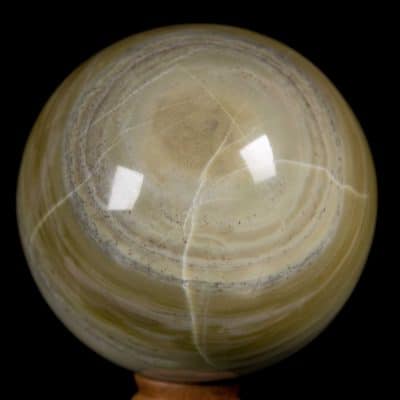
This specimen is Caribbean Blue Calcite/Blue Aragonite. It has been partially carved and polished into this stunning tower with a completely natural side. It has Stunning vibrant color that gives off ocean vibes, including small caves throughout!! This specimen has wonderful luster with amazing detail!!
In stock
Use the tabs below to explore crystal origins, geological details, crystal care guidance, and metaphysical insights.
Click/Tap Buttons to Jump to Section
Aragonite Origins & Background
Aragonite is a calcium carbonate mineral closely related to Calcite. Although the two share the same chemical formula, they differ in crystal structure, giving Aragonite its distinct growth habits and physical properties.
Aragonite is best known for forming striking crystal clusters, including starburst, spray, and branching formations. These structures reflect rapid crystallization under specific environmental conditions.
In addition to crystalline forms, Aragonite commonly occurs in massive form. This material is often compact, banded, or intergrown with other calcium-based minerals, making it suitable for cutting and polishing.
Aragonite is found worldwide, with notable deposits in Spain, Morocco, Peru, Mexico, Namibia, Pakistan and the United States.
Some well-known lapidary materials sold under trade names — such as Caribbean Blue Calcite — are actually natural combinations of Aragonite and Calcite. These mixed compositions reflect geological transitions rather than artificial assembly.
Aragonite Geological Information
Aragonite is a polymorph of calcium carbonate (CaCO₃), meaning it shares its chemical composition with Calcite but crystallizes in a different structure.
It forms primarily in low-temperature environments, including sedimentary deposits, hydrothermal systems, caves, and marine settings. Aragonite is also a major component of shells, corals, and some reef structures.
Crystalline Aragonite typically forms as orthorhombic prisms, needles, or radiating clusters. These forms often result from rapid mineral precipitation under conditions of high saturation.
Massive Aragonite forms when crystals grow too densely to develop distinct faces. This material often occurs alongside Calcite, forming layered or blended structures that are visually striking when polished.
Common Geological Occurrences
- Sedimentary limestone environments
- Cave formations and stalactitic growths
- Hydrothermal deposits
- Marine and reef-associated environments
Physical Properties
| Property | Value |
|---|---|
| Mineral Species | Aragonite (Calcium Carbonate) |
| Chemical Formula | CaCO₃ |
| Crystal System | Orthorhombic |
| Hardness (Mohs Scale) | 3.5 – 4 |
| Luster | Vitreous to resinous |
| Transparency | Transparent to opaque |
| Cleavage | Poor |
| Fracture | Uneven to conchoidal |
Aragonite Crystal Care & Ownership Advice
⚠️ Handling:
Aragonite is softer than Quartz and can be brittle. Crystal sprays and clusters should be handled gently to avoid breakage.
☀️ Sunlight & Heat:
Generally stable in indirect light, but avoid excessive heat which may cause dehydration or structural stress.
🧼 Cleaning:
Avoid soaking. Clean using a dry or very lightly damp soft cloth or brush. Do not use acidic cleaners.
📦 Storage & Display:
Store away from harder stones. Clusters should be displayed where they are protected from vibration and handling.
Calcite
For what and How Does One Use it?
Calcite comes in many flavors and color varieties.
Calcite energizes the body’s electromagnetic systems. It helps bring the Yin and Yang aspects of us into balance. It fortifies our emotional strength, helping alleviate fear and anxiety.
Meditate with Calcite to amplify thoughts and promote astral projection.
As an elixir it has powerful detoxification properties, with a special focus on the kidneys.
Read A LOT more regarding Calcite Properties at the link below (will open in a new tab/window)….
Flat Rate Shipping of only $6 – $9 USD equivalent, add as many items as you like!
- 30 days easy returns
- Faster shipping also available
 Guaranteed Safe Checkout
Related Crystal Specimens
-
 USD $40.00
 -
USD $141.00
-
USD $25.00
-
USD $25.00