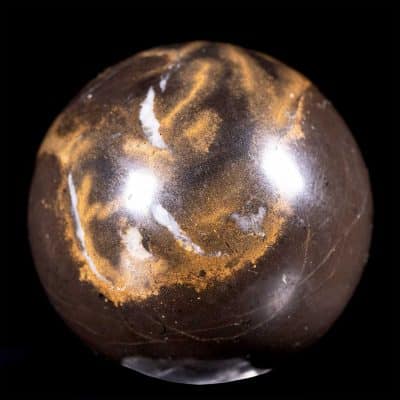
| Specimen Details | |
|---|---|
| Weight | 3.41 oz’s – 96.8 g |
| Dimensions | 4.215″ x 1.052″ long/wide (10.707 x 2.673 cm’s) |
| Country of Origin | Brazil |
Pink Tourmaline in Blue Beryl Tower/Point
USD $29.00
SKU: P3612
This beautiful Pink Tourmaline in Blue Beryl Tower has beautiful colors throughout. Blue Beryl is the massive variation of Aquamarine.
In stock
Use the tabs below to explore crystal origins, geological details, crystal care guidance, and metaphysical insights.
Click/Tap Buttons to Jump to Section
Pink Tourmaline Origins & Interesting Facts
Pink Tourmaline is a color variety of the Tourmaline mineral group, specifically within the Elbaite species. Tourmaline itself is one of the most chemically complex mineral families known, capable of incorporating a wide range of elements during formation. This complexity is what allows Tourmaline to occur in such an extraordinary range of colors.
The pink coloration in Pink Tourmaline is primarily caused by trace amounts of manganese introduced during crystal growth. Variations in temperature, pressure, and chemistry can produce shades ranging from very pale pastel pink to deep rose and hot pink tones.
Pink Tourmaline most commonly forms in granitic pegmatites, where slow cooling allows crystals to grow large and well-defined. These environments often produce long prismatic crystals with vertical striations running along the length of the crystal.
Notable sources of Pink Tourmaline include Brazil, Afghanistan, Pakistan, Madagascar, Mozambique, and select regions of the United States (notably California and Maine). Each locality produces material with slightly different color saturation, crystal habit, and internal clarity.
Historically, Tourmaline was frequently misidentified as other gemstones. Pink Tourmaline was often confused with ruby or spinel until advances in mineralogy clarified its true identity in the 18th century.
From a metaphysical perspective, Pink Tourmaline is traditionally regarded as a heart-centered stone associated with compassion, emotional healing, and unconditional love.
Pink Tourmaline Geological Information
Pink Tourmaline is a borosilicate mineral belonging to the trigonal crystal system. Its complex crystal chemistry allows for significant elemental substitution, which directly influences color and physical characteristics.
Crystals typically grow as elongated prisms with vertically striated faces. Terminations may be flat, pyramidal, or complex depending on growth conditions. Pink Tourmaline may occur as isolated crystals, clusters, or embedded within quartz matrices.
Physical Properties
| Property | Value |
|---|---|
| Mineral Family | Tourmaline (Elbaite) |
| Chemical Formula | Na(Li,Al)₃Al₆(BO₃)₃Si₆O₁₈(OH)₄ |
| Crystal System | Trigonal |
| Hardness (Mohs Scale) | 7–7.5 |
| Luster | Vitreous |
| Transparency | Transparent to translucent |
| Color Cause | Manganese |
Pink Tourmaline Crystal Care & Ownership Advice
⚠️ Handling:
Pink Tourmaline is durable but can fracture along internal stress lines. Avoid dropping or striking against hard surfaces.
🧼 Cleaning:
Water-safe for brief rinsing. Avoid prolonged soaking, especially for fractured or included specimens.
☀️ Light:
Generally light-stable, though extended exposure to very intense sunlight may soften color over long periods.
📦 Storage & Display:
Store separately from softerer minerals. For energetic balance, occasional grounding on natural earth is beneficial.
Tourmaline
For what and How Does One Use it?
Tourmaline should be one of the mainstays of any crystal healing layout collection. They work so well with humans, animals, and the plant kingdom.
Tourmalines charge and clear our electromagnetic system. Use them as batteries to charge yourself up overnight by holding them in your hands, under your pillow, or pointing at you from a bedside table.
Use Tourmaline crystals as a powerful back layout following the chakra/color points as a guide. This technique works on many, many levels.
Tourmaline makes for a very powerful elixir. Use Tourmaline combination elixirs to treat asthma, amongst many other ailments.
Tourmaline Crystals are highly recommended for color therapy.
Read more regarding Tourmaline Properties at the link below (will open in a new tab/window)….
Click/Tap Buttons to Jump to Section
Aquamarine Origins & Background
Aquamarine is the blue to blue-green variety of Beryl, prized for its clear, watery tones and calming visual presence. Its name is derived from the Latin aqua marina, meaning “water of the sea,” a reference to both its color and long-standing association with oceans and sailors.
Aquamarine has been valued for thousands of years and was historically carried as a protective talisman for sea travel. It has also been associated with clarity, calm communication, and emotional balance across many cultures.
Aquamarine forms as well-defined prismatic crystals, often with flat terminations that allow one to look directly down the crystal’s growth axis. Transparent crystals are particularly sought after, while more included material is often cut and polished.
Major sources of Aquamarine include Brazil, Pakistan, Afghanistan, Madagascar, Nigeria, and the United States.
Aquamarine Geological Information
Aquamarine is a variety of Beryl, a beryllium aluminum silicate with the chemical formula Be₃Al₂Si₆O₁₈. Its blue coloration is primarily caused by trace amounts of iron within the crystal structure.
Aquamarine commonly forms in granitic pegmatites and hydrothermal veins, where slow cooling allows large, well-formed crystals to develop. These environments often also produce other beryl varieties such as Emerald and Morganite.
Crystals typically grow as elongated hexagonal prisms with smooth faces and flat or slightly etched terminations. Transparency and color saturation vary depending on growth conditions and trace element concentration.
Common Geological Occurrences
- Granitic pegmatites
- Hydrothermal veins
- Association with Quartz, Feldspar, and Mica
Physical Properties
| Property | Value |
|---|---|
| Mineral Species | Beryl (Aquamarine variety) |
| Chemical Formula | Be₃Al₂Si₆O₁₈ |
| Crystal System | Hexagonal |
| Hardness (Mohs Scale) | 7.5 – 8 |
| Luster | Vitreous |
| Transparency | Transparent to translucent |
| Fracture | Conchoidal to uneven |
Aquamarine Crystal Care & Ownership Advice
⚠️ Handling:
Aquamarine is durable, but sharp impacts may chip crystal edges or terminations.
☀️ Sunlight & Heat:
Generally stable, though prolonged intense heat may alter color in some specimens.
🧼 Cleaning:
Clean using lukewarm water and a soft cloth or brush. Avoid ultrasonic cleaners for included or fractured pieces.
📦 Storage & Display:
Store separately from harder stones that may scratch the surface. Aquamarine displays beautifully in natural or indirect light.
Flat Rate Shipping of only $6 – $9 USD equivalent, add as many items as you like!
- 30 days easy returns
- Faster shipping also available
 Guaranteed Safe Checkout
Related Crystal Specimens
-
 USD $24.00
 -
-
USD $36.00
-
USD $13.00