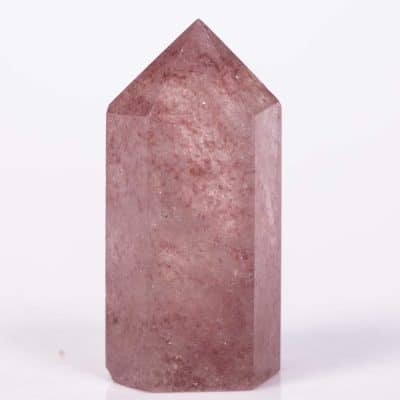
Weight – (without base) 14.36 oz’s – 407 gm’s
Dimensions – (without base) 4.129″ x 1.638″ x 2.636″ L x W x H (10.487 x 4.160 x 6.695 cm’s)
Country of Origin – India



USD $41.00
SKU: P3766
This specimen in Medachite Ajooba Jasper. Cut into its block/freeform like appearance, while smoothed and polished on the front to showcase the plethora of colors and unique patterning it contains. Known as the nurturing stone, Jasper crystals can be incredibly gentle on the energy in your space. Ajooba is there to support you through times of stress and hurt, while letting you enjoy your better headspaces. On top of this, Ajooba can strengthen your connection with the earth while aiding those who are in physical pain, especially surrounding the stomach.
In stock
Use the tabs below to explore crystal origins, geological details, crystal care guidance, and metaphysical insights.
Weight – (without base) 14.36 oz’s – 407 gm’s
Dimensions – (without base) 4.129″ x 1.638″ x 2.636″ L x W x H (10.487 x 4.160 x 6.695 cm’s)
Country of Origin – India
Click/Tap Buttons to Jump to Section
Jasper is a broad and ancient family of stones that occurs in a vast range of colors, patterns, and regional varieties. Rather than being a single appearance type, Jasper is best understood as a category encompassing many distinct expressions, each shaped by its local geology.
Jasper has been used by human cultures for thousands of years for tools, ornamentation, and ceremonial purposes. Its durability and earthy beauty made it one of the earliest stones worked by humankind. Today, Jasper is sourced globally, with notable material coming from New Zealand, Australia, Africa, India, Brazil, Madagascar, and the United States.
Despite its many visual forms, Jasper is consistently associated with grounding, stability, and connection to the natural world.
Jasper is a form of microcrystalline quartz (SiO₂), closely related to Chalcedony. It is distinguished by its opacity and the presence of various mineral impurities that create its wide range of colors and patterns.
These impurities may include iron oxides, clay minerals, and other trace elements, introduced during formation. Jasper typically forms through sedimentary or volcanic processes, often in environments where silica-rich fluids interact with surrounding material over long periods.
| Property | Value |
|---|---|
| Mineral Species | Microcrystalline Quartz (Jasper) |
| Chemical Formula | SiO₂ |
| Crystal System | Trigonal (microcrystalline) |
| Hardness (Mohs Scale) | 6.5–7 |
| Luster | Dull to vitreous |
| Transparency | Opaque |
| Typical Form | Massive |
The diversity of Jasper arises from its formation alongside different host materials. This results in banded, brecciated, orbicular, scenic, and mottled varieties—each visually unique while retaining the same core structure.
⚠️ Handling:
Jasper is durable and suitable for daily handling, though polished surfaces can scratch if rubbed against harder stones.
🧼 Cleaning:
Water-safe for rinsing. Avoid harsh chemicals or prolonged soaking. Dry thoroughly.
☀️ Light:
Generally light-stable. Prolonged intense sunlight may fade some dyed or treated material.
📦 Storage & Display:
Store with other mid-hardness stones or padded if highly polished. Excellent for long-term display or carry stones.
Flat Rate Shipping of only $6 – $9 USD equivalent, add as many items as you like!
 Guaranteed Safe Checkout