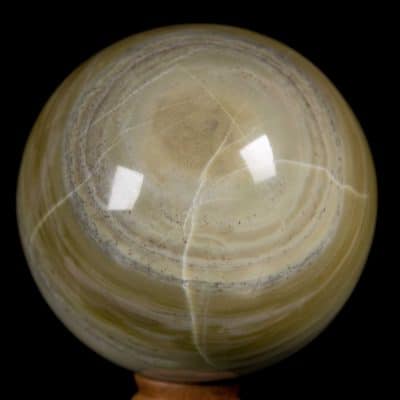
Weight – 2.99 oz’s – 84.7 gm’s
Dimensions – 3.166″ x 1.002″ tall x wide (8.041 x 2.546 cm’s)
Country of Origin – China




USD $20.00
SKU: P4256
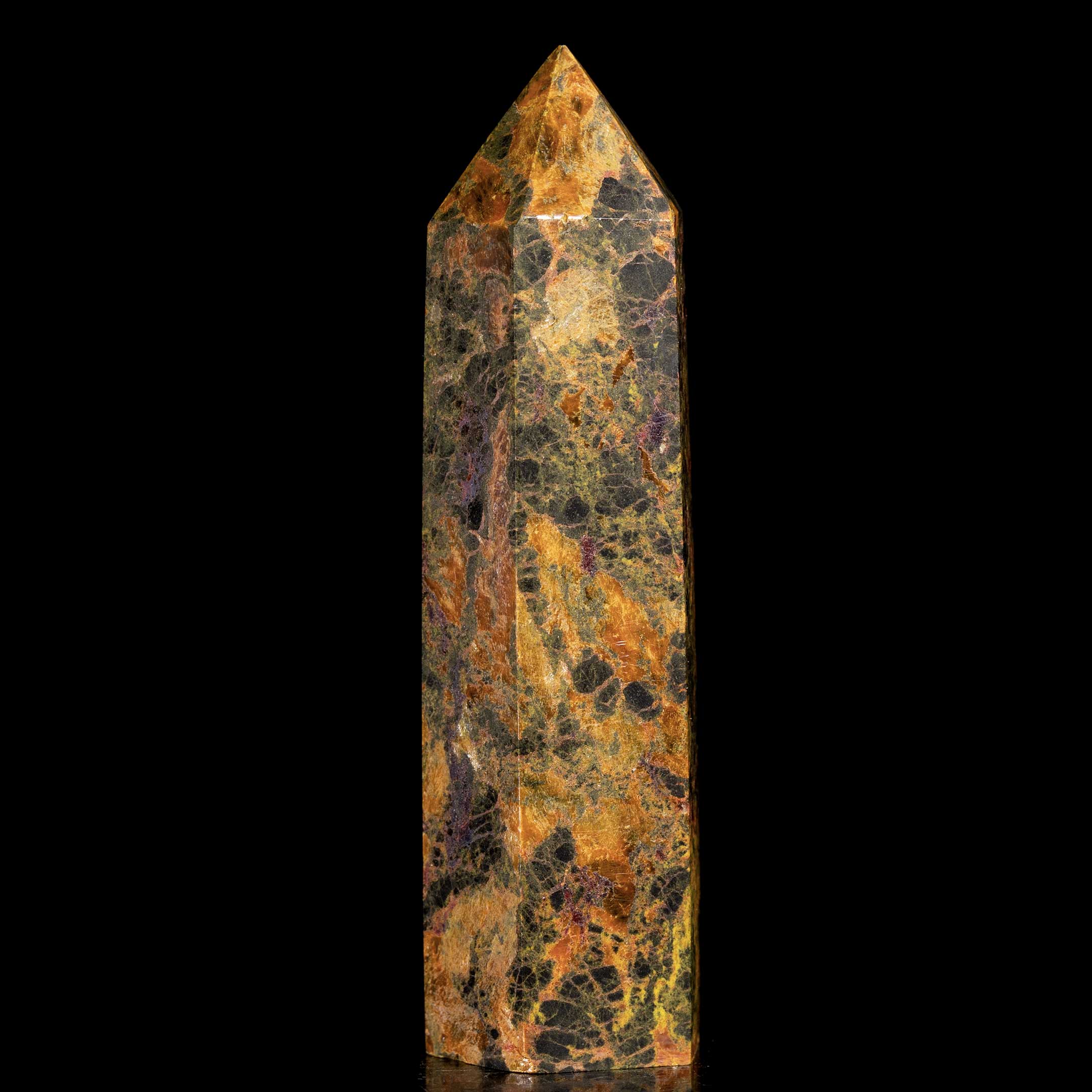
This specimen is a Combination of Epidote, Realgar and Orpiment. Carved and Lightly Polished into Towers/Points. Each piece being truly original and unique with the array of patterns and colors it has. Epidote known for being the Enhancer, Realgar as and Energizer, and Orpiment forming from the decay of the Realgar near volcanic steam holes or natural hot springs. Upon closer inspection you’ll find pleasant chatoyant flashes lighting up the color. An Amazing addition to any collection! Please note: Orpiment is a sulfide and the small amounts of Realgar in this specimen have traces of arsenic. Though it is stable in cut and polished form, please do not make an elixir from this specimen or cut/crush it.
In stock
Use the tabs below to explore crystal origins, geological details, crystal care guidance, and metaphysical insights.
Weight – 2.99 oz’s – 84.7 gm’s
Dimensions – 3.166″ x 1.002″ tall x wide (8.041 x 2.546 cm’s)
Country of Origin – China
Click/Tap Buttons to Jump to Section
Epidote Included Quartz—often simply referred to as Epidote Quartz—is a Quartz crystal that contains natural inclusions of the green mineral Epidote. These inclusions may appear as wispy internal veils, sprays, or moss-like growths within the Quartz, creating a strong visual impression of vitality and movement.
This combination is found in several parts of the world, including Brazil, Pakistan, India, Alaska (USA), and select African localities. Each source produces distinctive inclusion styles, ranging from fine internal filaments to bold, clearly defined Epidote crystals encased within Quartz.
Because Quartz amplifies whatever it contains, Epidote Included Quartz has long been referred to in crystal traditions as “The Enhancer.” The Quartz acts as a magnifier, intensifying the energetic signature of Epidote while also making it more accessible and usable.
Natural Epidote inclusions should not be confused with surface coatings or artificially introduced materials. Authentic Epidote Quartz shows inclusions fully enclosed within the Quartz growth structure.
Epidote Included Quartz is composed primarily of silicon dioxide (SiO₂) with inclusions of Epidote, a calcium aluminum iron silicate mineral. Both minerals form in metamorphic and hydrothermal environments, often under conditions of pressure, heat, and fluid movement.
Epidote inclusions typically form first, with Quartz later growing around them, sealing the green mineral within the crystal. This growth sequence is what gives Epidote Quartz its characteristic “encased” appearance.
| Property | Value |
|---|---|
| Mineral Species | Quartz with Epidote inclusions |
| Chemical Formula | SiO₂ + Ca₂(Al,Fe)₃(SiO₄)₃(OH) |
| Crystal System | Trigonal (Quartz) / Monoclinic (Epidote) |
| Hardness (Mohs Scale) | 7 (Quartz), 6–7 (Epidote) |
| Luster | Vitreous |
| Transparency | Transparent to translucent |
| Defining Feature | Natural green Epidote inclusions |
Inclusion-bearing Quartz crystals are often valued for the way internal minerals interact with the Quartz matrix. In the case of Epidote Quartz, this interaction creates a synergistic structure where amplification and direction occur simultaneously.
⚠️ Handling:
Generally durable, but crystals with prominent internal fractures or fine terminations should be handled gently.
🧼 Cleaning:
Water-safe for brief rinsing. Avoid prolonged soaking, especially for specimens with visible internal fractures. Dry thoroughly.
☀️ Light:
Light-stable under normal conditions.
📦 Storage & Display:
Store separately to protect clarity and surface luster. Suitable for grids, body placement, and regular handling.
Click/Tap Buttons to Jump to Section
Epidote is a calcium aluminum iron silicate mineral that is widely distributed across the globe. It commonly forms in metamorphic rocks such as schist and gneiss, and also occurs in hydrothermal veins and altered igneous rocks. Its name comes from the Greek word epidosis, meaning “increase,” referencing the way one crystal face often grows longer than the others.
Epidote is most commonly green, though shades can range from yellow-green to deep forest green depending on iron content. Well-formed Epidote crystals are prized by collectors for their sharp, prismatic shapes and distinctive striations.
Notable localities include Austria, Pakistan, Peru, Mexico, Norway, Italy, the United States, and Russia. Epidote is frequently found associated with Quartz, Prehnite, Chlorite, Calcite, and Actinolite.
From a metaphysical perspective, Epidote has long been regarded as a crystal of growth, expansion, and energetic amplification.
Epidote forms during regional and contact metamorphism, as well as through hydrothermal alteration of calcium-rich rocks. It crystallizes in the monoclinic crystal system and often appears as elongated prismatic crystals or granular masses.
| Property | Value |
|---|---|
| Mineral Class | Sorosilicate |
| Chemical Formula | Ca₂(Al,Fe)₃(SiO₄)(Si₂O₇)O(OH) |
| Crystal System | Monoclinic |
| Hardness (Mohs) | 6 – 7 |
| Luster | Vitreous to resinous |
| Transparency | Transparent to opaque |
| Cleavage | One direction, imperfect |
| Common Associations | Quartz, Prehnite, Chlorite, Calcite |
Epidote is chemically stable and durable, making it suitable for both specimen display and metaphysical use.
🧼 Cleaning:
Epidote is generally water-safe for brief rinsing. Avoid prolonged soaking if associated minerals are present.
⚠️ Handling:
Crystals may have sharp edges. Handle with care to avoid chipping or scratching.
☀️ Light Exposure:
Epidote is light-stable and does not fade under normal display conditions.
📦 Storage:
Store separately from softer minerals to prevent surface abrasion.
Flat Rate Shipping of only $6 – $9 USD equivalent, add as many items as you like!
 Guaranteed Safe Checkout