Weight – 3.78 oz’s – 107.4 gm’s
Dimensions – 2.805″ x 2.259″ x 0.952″ long/wide/tall (7.125 x 5.738 x 2.420 cm’s)
Country of Origin – Madan Ore Field, Bulgaria





USD $39.00
SKU: M1560
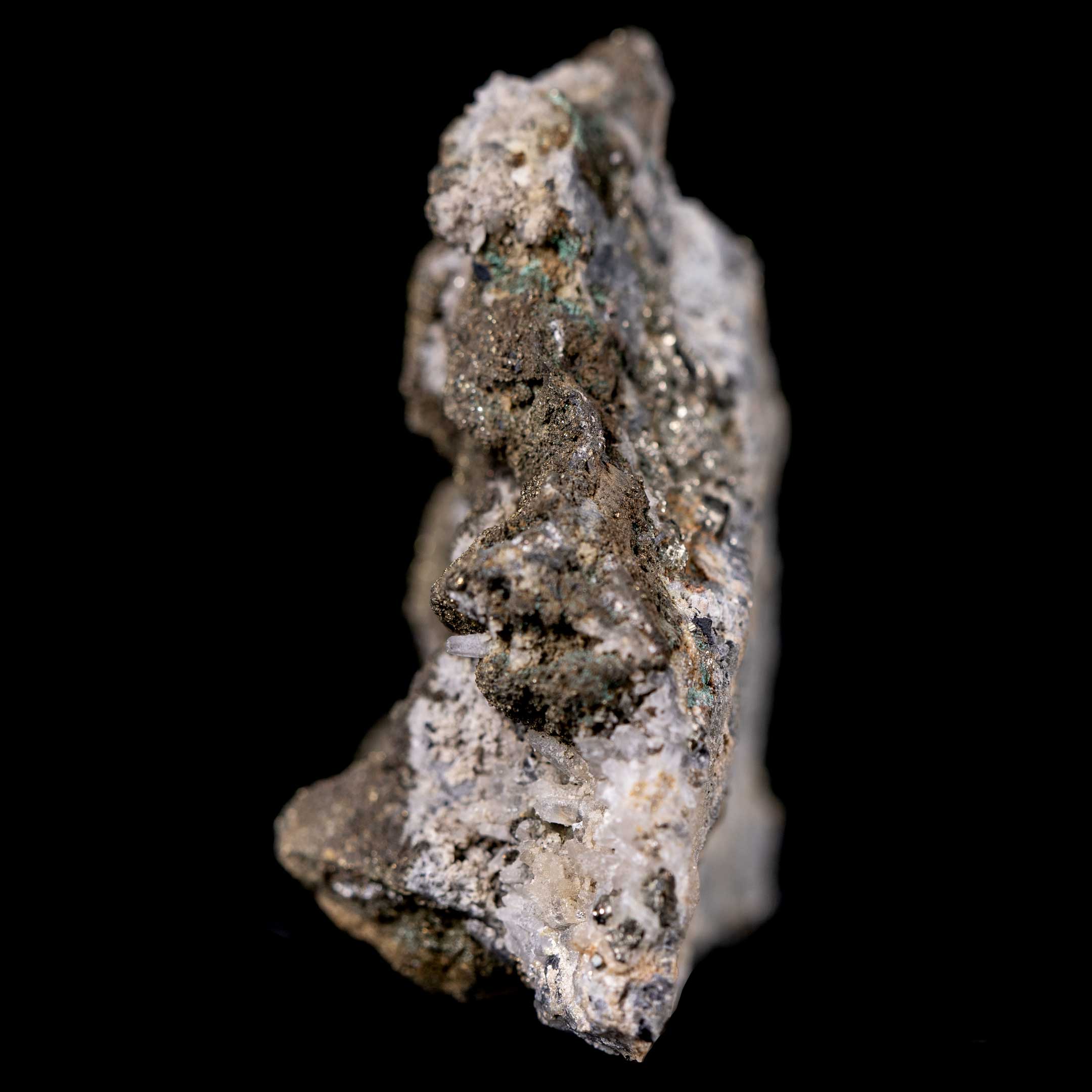
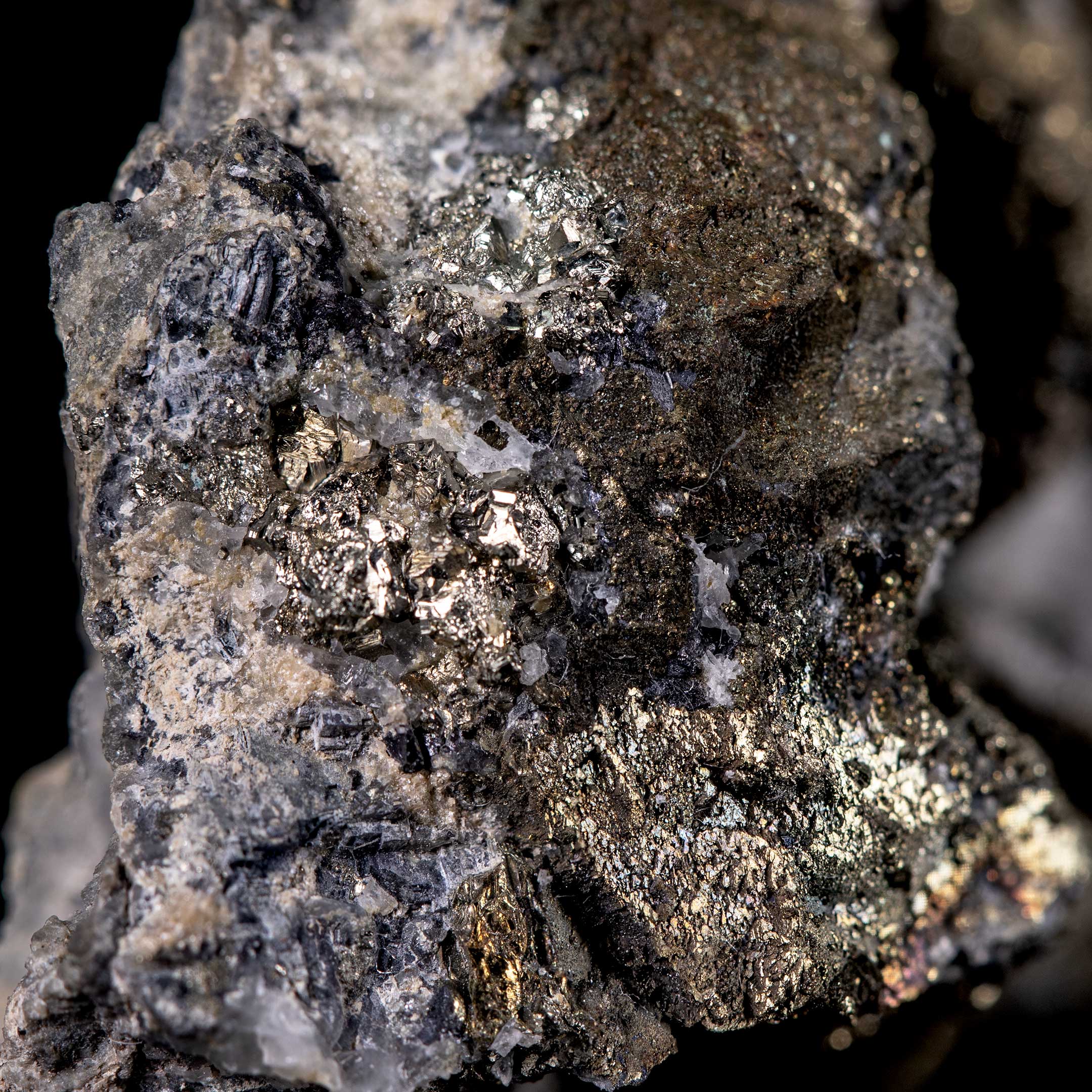
This Included Cluster from Bulgaria features fantastic form and incredible lustrous iridescent chalcopyrite!! Even given a closer look tiny Quartz points can be spotted. This specimen is in excellent condition!
In stock
Use the tabs below to explore crystal origins, geological details, crystal care guidance, and metaphysical insights.
Weight – 3.78 oz’s – 107.4 gm’s
Dimensions – 2.805″ x 2.259″ x 0.952″ long/wide/tall (7.125 x 5.738 x 2.420 cm’s)
Country of Origin – Madan Ore Field, Bulgaria
Click/Tap Buttons to Jump to Section
Quartz Clusters are natural groupings of multiple Quartz crystal points growing together on a shared base. Each point retains its own termination while remaining energetically and structurally connected to the whole. This formation allows Quartz Clusters to function as collective radiators of energy rather than single directional tools.
Clusters form in open cavities where many crystals nucleate simultaneously under stable conditions. Because of this cooperative growth, clusters are often viewed as symbols of unity, cooperation, and shared purpose.
Quartz Clusters can occur in Clear Quartz, Smoky Quartz, Amethyst, Citrine, and many other Quartz varieties, with each type adding its own character to the cluster’s overall influence.
Quartz Clusters are composed of silicon dioxide (SiO₂) and crystallize in the trigonal crystal system. The clustered habit forms when multiple crystal points grow together from a shared substrate, typically within vugs or cavities in host rock.
Each point within a cluster follows the same crystallographic rules as individual Quartz crystals, but the collective arrangement allows for multidirectional growth and energy dispersion.
| Property | Value |
|---|---|
| Mineral Species | Quartz (Cluster formation) |
| Chemical Formula | SiO₂ |
| Crystal System | Trigonal |
| Hardness (Mohs Scale) | 7 |
| Luster | Vitreous |
| Transparency | Transparent to translucent |
| Defining Feature | Multiple naturally terminated points |
Because each point radiates outward, clusters naturally disperse energy in all directions rather than focusing it in a single beam. This makes them ideal for environmental work, group settings, and energetic stabilization of larger spaces.
⚠️ Handling:
Lift Quartz Clusters from the base rather than individual points. Terminations can chip if knocked together.
🧼 Cleaning:
Water-safe for brief rinsing. Avoid prolonged soaking if fractures or inclusions are present. Dry thoroughly.
☀️ Light:
Clear Quartz Clusters are light-stable. Amethyst or Smoky varieties should be protected from prolonged intense sunlight.
📦 Storage & Display:
Display where the cluster can radiate freely. Avoid stacking heavy objects on top of points.
Click/Tap Buttons to Jump to Section
Included Quartz refers to Quartz crystals that contain other minerals trapped within them during growth. These inclusions may appear as needles, clouds, veils, phantoms, sprays, plates, threads, or granular deposits, each reflecting the geological conditions present at the time of formation.
Common inclusions include Chlorite, Rutile, Tourmaline, Titanium-bearing minerals, Iron oxides, and many others. Each specimen is inherently unique, as the timing, chemistry, and environment of growth determine the inclusion’s shape, placement, and density.
Included Quartz occurs worldwide, with notable localities in Brazil, Madagascar, Pakistan, India, the United States, and parts of Africa. Because inclusions record a snapshot of the crystal’s growth history, many collectors consider Included Quartz to be a visual and geological record of Earth’s evolving conditions.
Included Quartz is composed of silicon dioxide (SiO₂) and crystallizes in the trigonal crystal system, consistent with all Quartz varieties. The defining feature is the presence of one or more foreign minerals incorporated during crystal growth.
Inclusions form when Quartz grows in environments where other minerals are suspended in hydrothermal fluids. As the Quartz crystal develops, these minerals may become trapped internally rather than being excluded or deposited on the surface. Growth may continue around the inclusion, fully enclosing it within the crystal body.
In some cases, inclusions outline earlier growth stages, forming phantoms. In others, needle-like or fibrous inclusions such as Rutile or Tourmaline grow simultaneously with the Quartz, creating complex internal structures.
| Property | Value |
|---|---|
| Mineral Species | Quartz with mineral inclusions |
| Chemical Formula | SiO₂ (host crystal) |
| Crystal System | Trigonal |
| Hardness (Mohs Scale) | 7 (host crystal) |
| Luster | Vitreous |
| Transparency | Transparent to translucent |
| Defining Feature | Internal mineral inclusions |
From a geological perspective, inclusions provide valuable insight into the temperature, pressure, and chemistry present during crystal formation. Each Included Quartz specimen is effectively a natural archive of its growth environment.
⚠️ Handling:
Included Quartz is generally durable, but internal fractures or delicate inclusions may be present. Handle gently and avoid sudden impacts.
🧼 Cleaning:
Water-safe for brief rinsing. Avoid prolonged soaking, especially for crystals with visible fractures or porous inclusions. Dry thoroughly.
☀️ Light:
Most Included Quartz is light-stable. Some iron-rich inclusions may darken slightly with prolonged intense sunlight.
📦 Storage & Display:
Store separated from harder specimens to prevent chipping. Display securely to protect terminations.
Flat Rate Shipping of only $6 – $9 USD equivalent, add as many items as you like!
 Guaranteed Safe Checkout


