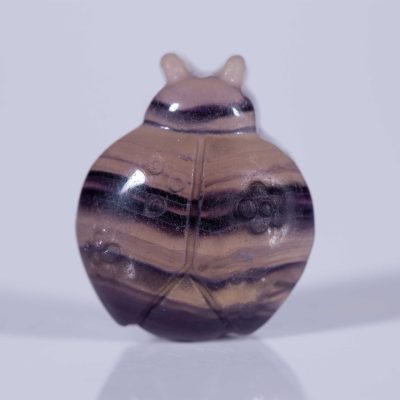
| Specimen Details | |
|---|---|
| Weight | 2.26 oz’s – 64.2 g |
| Dimensions | 1.363″ x 2.283 tall x wide (3.462 x 5.800 cm’s) |
| Country of Origin | Brazil |
Polished Moss Agate Pyramid
SKU: P5350
This is a Moss Agate specimen! This Polished Moss Agate has wonderful patterns and great detail! It has also been carved and polished into a Pyramid form to showcase its natural beauty from all sides.
Use the tabs below to explore crystal origins, geological details, crystal care guidance, and metaphysical insights.
Click/Tap Buttons to Jump to Section
Moss Agate Origins & Background
Moss Agate is a variety of Chalcedony Quartz distinguished by its green, moss-like inclusions rather than traditional banding. These natural inclusions create patterns resembling foliage, roots, or forest growth, giving the stone a strong visual association with nature.
Unlike banded Agates, Moss Agate is typically translucent to milky white with internal dendritic or filament-like inclusions formed by minerals such as iron or manganese oxides.
Major sources of Moss Agate include India, Brazil, Uruguay, Madagascar, and parts of the United States. Each locality can produce slightly different inclusion structures and color tones.
Historically, Moss Agate has long been associated with agriculture, nature spirits, and fertility. In ancient traditions it was sometimes carried by farmers and gardeners as a talisman for healthy crops and balanced growth.
Moss Agate is not technically a true Agate by strict geological definition (as it lacks banding), but it is traditionally grouped with Agates due to its Chalcedony structure and historical naming conventions.
Moss Agate Geological Information
Moss Agate is a microcrystalline form of Quartz (Silicon Dioxide – SiO₂) belonging to the Chalcedony group. It forms when silica-rich solutions crystallize and trap mineral inclusions during growth.
The moss-like patterns are created by inclusions of iron, manganese, or other mineral oxides, which crystallize in branching or dendritic formations within the Chalcedony.
Moss Agate commonly forms in volcanic environments and silica-rich sedimentary settings, where slow mineral deposition allows inclusions to develop intricate internal structures.
Common Geological Occurrences
- Volcanic and silica-rich sedimentary environments
- Associated with Chalcedony, Jasper, and Quartz
- Formed through inclusion-rich silica deposition
Physical Properties
| Property | Value |
|---|---|
| Mineral Species | Chalcedony (Moss Agate variety) |
| Chemical Formula | SiO₂ |
| Crystal System | Trigonal (microcrystalline) |
| Hardness (Mohs Scale) | 6.5 – 7 |
| Luster | Waxy to vitreous |
| Transparency | Translucent to opaque |
| Fracture | Conchoidal |
Moss Agate Crystal Care & Ownership Advice
⚠️ Sunlight & Heat:
Moss Agate is generally stable in light. Display in indirect or ambient light to preserve polish and avoid unnecessary surface stress.
✋ Handling:
Moss Agate is durable, but edges can chip if struck. Handle polished pieces with reasonable care.
🧼 Cleaning:
Moss Agate is water-safe. Clean with lukewarm water and a soft brush or cloth. Avoid harsh chemicals.
📦 Storage & Display:
Store away from harder stones that may scratch its surface. Moss Agate displays beautifully in natural or botanical settings.
Flat Rate Shipping of only $6 – $9 USD equivalent, add as many items as you like!
- 30 days easy returns
- Faster shipping also available
 Guaranteed Safe Checkout
Related Crystal Specimens
-

 USD $29.00
 -
USD $16.00
-
USD $13.00
-